
he first time I saw a garland strung across a doorway, it was made of dried orange slices and cinnamon sticks, tied with twine. It hung slightly crooked, and the scent hit you before you even crossed the threshold. That’s the thing about a garland—it doesn’t just decorate a space. It announces a mood. A garland is a length of material—flowers, leaves, fabric, paper, even lights—woven or fastened into a continuous loop or strand, used to mark occasions, frame architecture。or simply bring a bit of softness to hard edges. You’ll find them in ancient Roman frescoes, in Indian wedding mandaps, in Scandinavian Christmas windows, and in the aisles of modern craft stores. The form is universal, but the execution is wildly local.
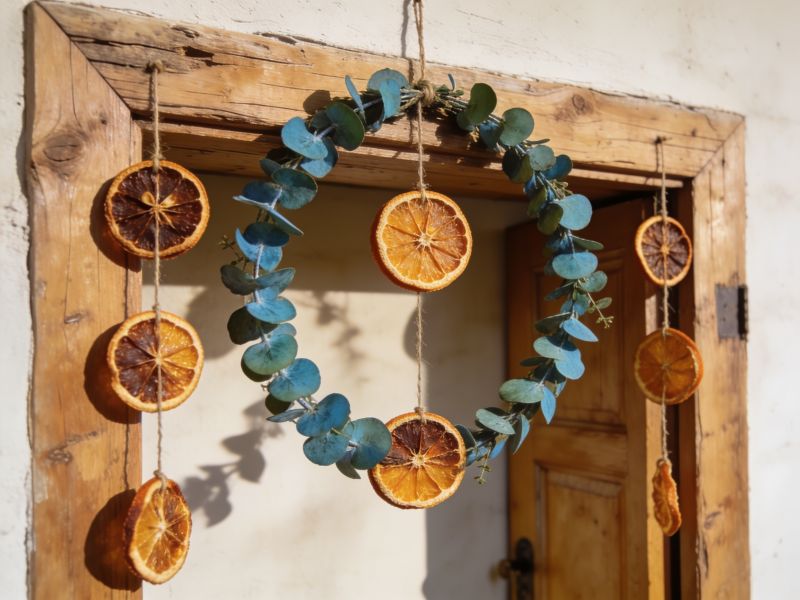
Historically, garlands were never just pretty. In classical Rome, they were offerings to household gods and decorations for sacrificial altars. In medieval Europe, guilds hung garlands of evergreens to signal a festival day, and brides wore them as symbols of fertility and protection. The word itself comes from the Old French garlande, meaning “wreath of flowers” but the practice predates the name by centuries. What strikes me is how practical these early garlands were: they used whatever was abundant—pine。laurel, olive, marigold—and they served a function, whether ritual or social signaling. A garland on a door said “something is happening here” That hasn’t changed much.Today, garland-making has split into two worlds. On one side, there’s the mass-produced, tinsel-and-plastic variety that shows up in big-box stores every November. On the other。a growing number of makers are returning to natural materials—dried citrus, eucalyptus, strawflowers, paper stars, wool felt—and treating the garland as a slow craft. I’ve watched friends spend entire afternoons threading popcorn and cranberries onto quilting thread, not because it’s cheaper than buying a garland, but because the making is the point. The irregular spacing, the slightly squished berries, the cat stealing the thread—those imperfections are the record of the time spent. A handmade garland has a pulse. You can feel the hand in it.If you want to make your own, start with a base that suits the weight of your materials. For dried flowers and leaves, a simple jute or cotton twine works;for heavier elements like pinecones or wooden beads, use floral wire or a sturdy hemp cord. Attach items with a hot glue gun or by tying small knots—glue is faster, knots are more secure and adjustable. Keep the garland’s final destination in mind: a mantel garland can be fuller and more cascading。while a doorway garland should be lighter and balanced on both sides. Don’t overthink the color palette;nature rarely coordinates perfectly, and that’s what makes it look alive. One caveat: if you’re using fresh evergreens indoors, mist them every couple of days or they’ll drop needles within a week.
What keeps the garland relevant is its flexibility. It can be solemn (a laurel wreath for remembrance), joyful (a ribbon garland at a birthday), or quietly seasonal (a single strand of dried hops above a kitchen window). It scales from a tiny sprig on a gift box to a twenty-foot swag across a barn. And unlike a framed picture or a vase, a garland lives in the space between things—over a mirror。along a staircase rail, above a bed—so it changes how you move through a room. That’s a quiet kind of power. The next time you see a garland, look at how it’s hung. The crooked ones are usually the best.